By Rachel Puryear
The death of a parent, partner, or other close family member is like an earthquake. We’re so deeply impacted by the initial major event itself – the shock and loss, the funeral, the grief and acute void – that we often don’t notice coming and sneaking up on us the slow-motion landslide that follows.
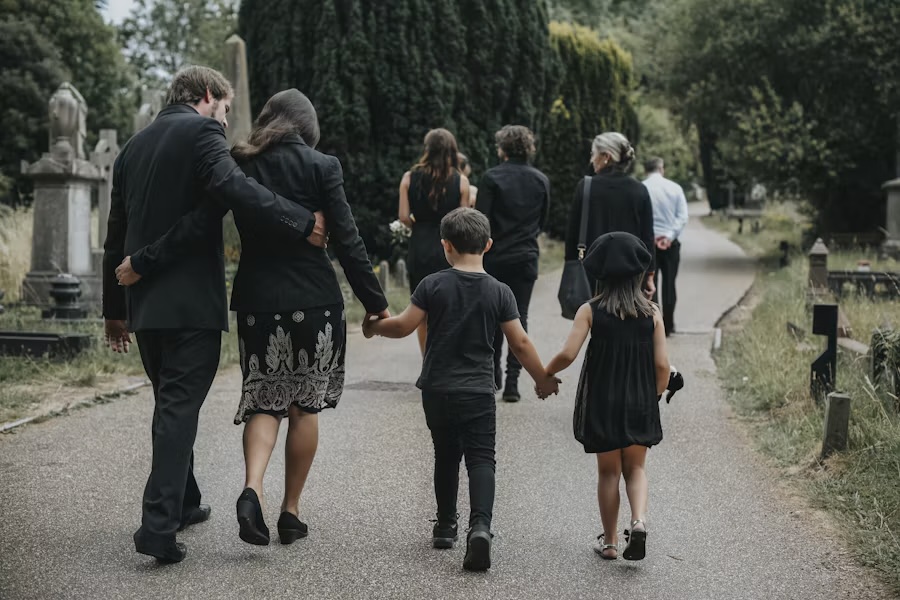
As the dust settles, we realize that not only has a person left this world; but also what is gone with them was a specific set of roles, balances, and invisible tethers that held our families together.
For many people, this “messy aftermath” can be pretty overwhelming – especially for those who feel the shifts the most. It means grieving not only the deceased, which is difficult enough; but also grieving the version of the family (by birth, or chosen) that no longer exists.
Familial Roles
In every family, there is an emotional ecosystem. Someone is the peacemaker. Someone is the organizer. Someone is the “glue” who holds things together: remembering the birthdays and anniversaries and other special or significant days, and mediates the arguments. This is true, including in dysfunctional and otherwise struggling families. When a person passes, they leave behind a vacuum, left by their now-unfulfilled role.
For some, this shift creates an unexpected opportunity for growth (albeit amidst grief, nonetheless). Adult children who were always in the shadow of a dominant parent may suddenly step into a leadership role, and flourish.
There is a quiet, complex beauty in seeing a family member discover a strength they had never tapped before.
Complicated Grief
There is also the complicated relief of the longtime caregiver – the person who spent years sacrificing their own autonomy to provide care. To feel your life returning to you while you are still grieving the person you once cared for is a jarring, bittersweet paradox. It is also a “good” shift in that sense, but one that often comes with a side of guilt that requires some deep spiritual grace to fully process.
Rough Roads Ahead
But we must also be honest with ourselves about the friction side of things often following family deaths. When the “glue” has passed on, the pieces can often start to drift – or even collide.
If the deceased and their influence was the only one keeping family member from fighting with one another, those fights will often erupt with renewed intensity. If the deceased held the power – and the purse strings, the aftermath can become a battlefield over legacy. These fights are actually rarely about money or jewelry; they are about emotional validation. They are battles over who was loved more, who is the “true” heir to the family identity, and who gets to define the narrative of the life that was lost.
Changes Can Arise
Then there are the shifts that are neither good nor bad – they are simply different. You realize that the only reason you stayed in touch with certain relatives, acquaintances, and other people was because the deceased had coordinated all the calls, gatherings, and chatter. Suddenly, you are faced with the choice of whether to put in the effort to build a bridge on your own, or to let that relationship largely fade out.
For empaths and HSP’s, this period can be particularly taxing. We don’t just see the friction; we feel it deep down, too. We often feel a compulsive need to step in and become the new “glue” to stop the bleeding, fearing that if we don’t, then the family will disintegrate.
The wisdom found in both clinical psychology, and also the lived experience of survivors, is this: you cannot force a new equilibrium.
The “messiness” is not necessarily a sign that the family is failing; it can instead be a sign that it is just recalibrating. Just as a bone sometimes has to be reset to heal properly, so family dynamics often have to break and be rearranged before a new, more honest version of the relationship can emerge. This is painful, but often necessary.
Self Care During This Challenging Time
If you find yourself in the middle of this friction, remember that you can witness the chaos without becoming the shock absorber for everyone else’s grief. It is okay to let some roles remain unfilled. It is okay to acknowledge that some relationships will not survive the loss of the person who always held them together.
Death takes so much from us, but in the wreckage of the old dynamics, there is also a chance to build something more authentic. We move from a structure based on obligation and habit to one based on choice. It is a painful transition, but it is also where the real healing begins.
Thank you, dear readers, for reading, following, and sharing. Here’s to getting through this also-tough aspect of grief. If you enjoyed this post, please “like” and subscribe, if you have not already.
Check out my other blog, too – Free Range Life, at https://freerangelife.net.
Note: We are a participant in the Amazon Services LLC Associates Program. As an Amazon associate, we earn from qualifying purchases. We appreciate your support!


Leave a Reply