By Rachel Puryear
Your life would probably be easier and less complicated; if you could automatically tell whether other people are lying to you, or telling you the truth.
Most people, however, aren’t very good at telling when someone is lying to them – even though many think they are. However, there are exceptions, as a small percentage of the population spots lies significantly better than most others – including folks belonging to certain professions and hobbies.
Detecting lies is not necessarily a matter of intelligence, worldliness, or sophistication (though the latter two can factor in, in certain contexts). Rather, it is a skill that people can learn and develop, to a large extent.
So, who are the people who are better than most of the rest of us at detecting others’ deceptions, and what can we all learn from them?
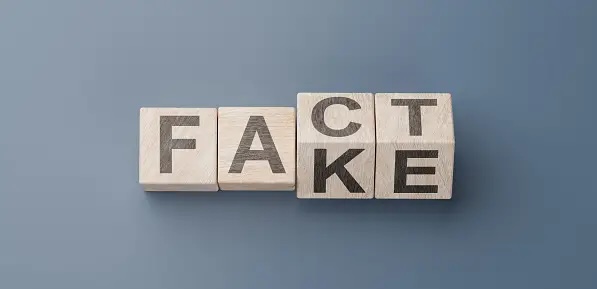
Believing Lies, Versus Doubting Truth Tellers
When we determine whether or not to believe what another person says, there are two ways it can go wrong: One way is to believe someone who is actually lying to us, and the other way is to disbelieve someone who’s telling us the truth.
Making either kind of mistake can cause a great deal of damage – to one’s relationships, social reputation, careers, well-being, and otherwise.
Making either kind of mistake can also cost other people around us a great deal, in all ways as well.
It might even have major repercussions for strangers – for instance; if we’re on a jury (or a judge) in a courtroom. Guilty people have gotten away with terrible acts and walked free, while innocent people have paid a terrible price and even wrongfully gone to prison; because fact finders got it wrong. There are many reasons this happens, but incorrect lie detection is a big factor.
Accordingly, the stakes in detecting truth versus lies can be minimal, or they can be incredibly high for ourselves as well as others. Therefore, it’s good for all if more people hone their skills in lie detection. And yes, it is a skill that can be developed and learned – as opposed to an inborn trait.
What Professions Stand Out in the Significance of Lie Detection Capabilities
There are some professions in which lie detection is a critical skill – and can even make the difference between life and death, and making a community safer versus more dangerous. It can also make the difference between justice, versus miscarriage of such.
Such professions include law enforcement, court judges, therapists, teachers, and customs agents. Interestingly, these are also professions in which sometimes it’s necessary (for the professional) to effectively deceive people, as well as accurately detect the deceptions – and assess the credibility of – others.
However, in a study comparing experienced people in law enforcement (as well as several other professions) with college students in terms of their ability to catch lies and spot liars, the former did not perform significantly better than the latter!
In that same study, secret service agents performed better than the other professions, and better than chance. They didn’t catch every lie, but seemed the most overall skilled at such.
Even a study of successful poker players found that while the players were skilled at spotting other players’ bluffs and carefully concealed emotions during the games, those skills didn’t necessarily translate well into spotting lies in other contexts – successful poker players weren’t better than others at catching deceptions outside of the game.
What We Can All Learn
Luckily, there are lessons we can all learn from the few people who are truly good at spotting liars, and detecting deception. Even if you’re not good at that now, it’s a skill that one can develop.
Here are some strategies to improve your own lie detection capabilities:
- Look at behavior over content. Often, people fall for lies and manipulation not because they really believe them, but because they focus on the content of what someone says – rather than paying more attention to whether the behavior (as well as more subtle cues) really lines up with the content or not.
- Let them talk, and get comfortable – and eventually reveal themselves. Sometimes someone will be so eager to catch a liar – or so outraged – that they will be hostile, and quickly confront the person. However, there are two mistakes to this approach – being visibly angry will make the person shut down, and cutting them off before you can catch them in an obvious lie.
- Many people have tells – but the best liars know what others are looking for. Many people will be clearly uncomfortable while lying – looking down, trembling, changes in speed and pitch of their voice, covering their face, sweating. But accomplished liars who deceive regularly know you’re looking for those things – so they make a point of looking you in the eyes, of appearing calm, of speaking in a reassuring tone. Know who you’re dealing with – and if this is a prolific and frequent liar, body language won’t tell you as much as it would for an average person.
- Ask follow-up questions. If you suspect you’re being told a story that’s a bunch of BS, remain calm but gently press for more details – as though you’re just curious to know more (not in interrogation mode). A fake story usually won’t be fleshed out with details (unless they’re put an awful lot of trouble into it), so ask for what’s missing. For instance – they said they came home much later than expected last night because they had car trouble, and couldn’t call you because there was no cell signal. Well, what went wrong with the car? How did they get home? When are they taking it to the shop? What street did this happen on? Also, if they don’t ever want to talk about it (within a reasonable time), maybe it’s because they’re afraid you’ll see through them.
- Get verifiable information. Follow up their story with research, and in your questioning, try to get at least one verifiable fact. Again, with the previous example – see if there was a police report. See if they do follow up with getting car repairs. Check where they said they broke down, and see if there really isn’t good cell signal there.
Thank you, dear readers, for reading, following, and sharing. Here’s to better learning how to spot deceptions. If you enjoyed this post, please “like” and subscribe, if you have not already.
Check out my other blog, too – Free Range Life, at https://freerangelife.net.
Note: We are a participant in the Amazon Services LLC Associates Program. As an Amazon associate, we earn from qualifying purchases. We appreciate your support!

 World Class Hugs
Leave a reply to Anonymous Cancel reply