By Rachel Puryear
The southwestern United States region, including Utah; is known for its natural desert scenery that’s as breathtaking and dramatic, as it is otherworldly.
Here are the highlights of a recent road trip to Moab, a vibrant town in southeastern Utah, and its surrounding areas:

Arches National Park
You’ve probably seen iconic images from this park, especially of the famous Delicate Arch.

And, there’s so much more. There’s a main road through the park that’s about 25 miles long, and has lots of stops along the way with breathtaking views, and fascinating formations.

If you ever played the game as a child of finding shapes in the clouds in the sky, you can do that with the thousands of arches and formations throughout this park – many of them do have names already, based upon people’s imaginations.
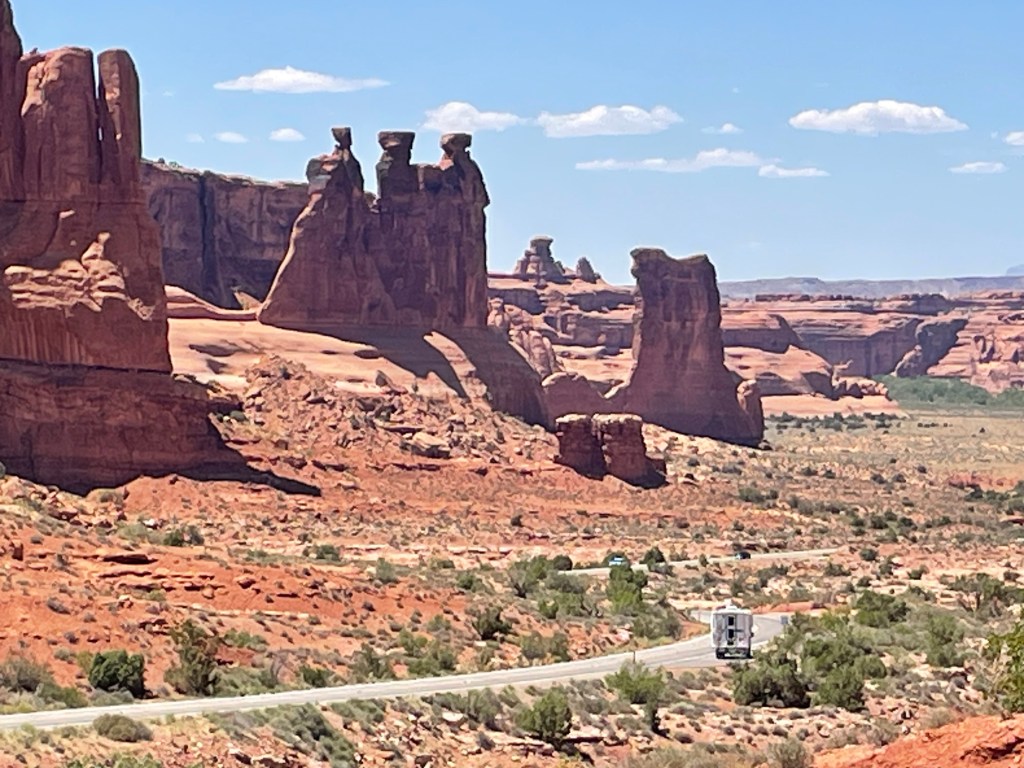
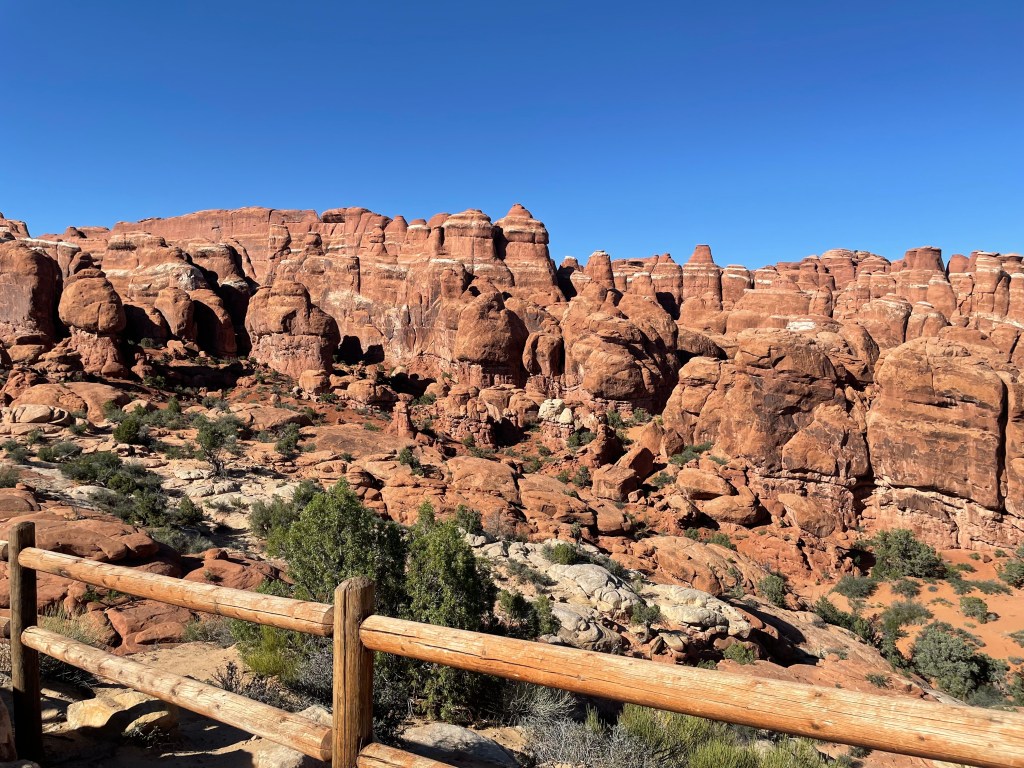


There is a wide variety of hikes, and there are some stops where you can go out onto the arches themselves. At the Delicate Arch, the hike out to it is quite challenging – but you can still get a pretty good view of it with a much shorter hike (it’s still steep and uphill, though).

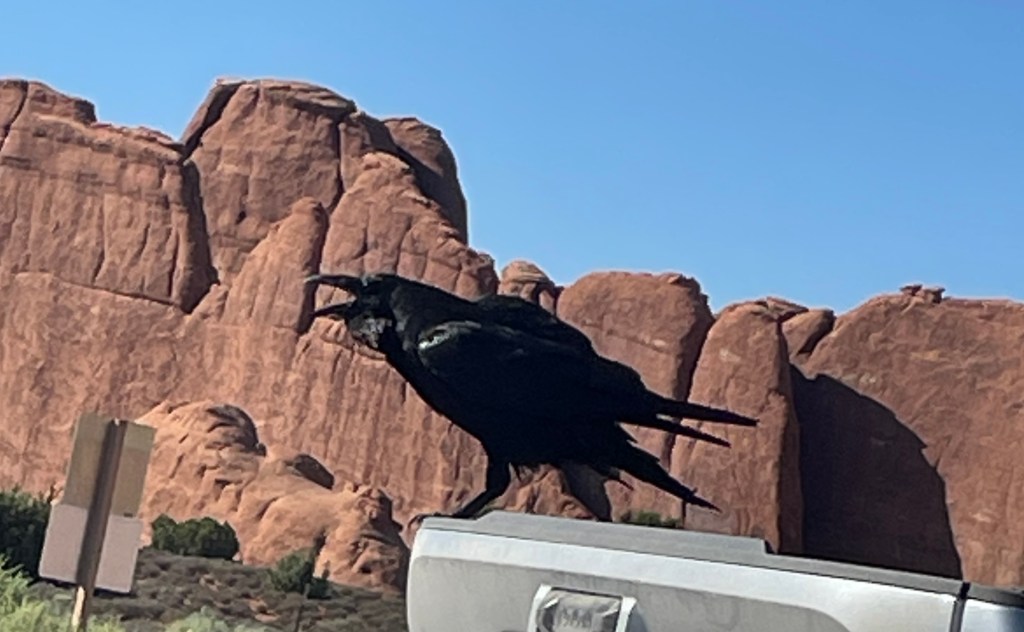
The Indigenous peoples of this area regard the arches as sacred grounds, and it’s very important to them spiritually. Looking around, it’s easy to see why, as it’s a deeply inspiring and special place.
Note: This park requires reservations and timed ticket entry between 7 am and 4 pm, from April through October. See here for more about visiting Arches, including more about making reservations. See here for accessibility information.
Also note: Running water is only available at the Visitors’ Center at this park, and you’ll need lots of water in this hot, dry desert environment. Bring at least a gallon of water with you for each person and pet in your party – even more if you’ll be hiking. A cooler powered by your car or a Jackery can keep drinks and food cold and fresh.
Canyonlands National Park
Canyonlands has lots of – you guessed it – canyons; as well as sweeping canyon and river views that will make you want to just look out at them all day.
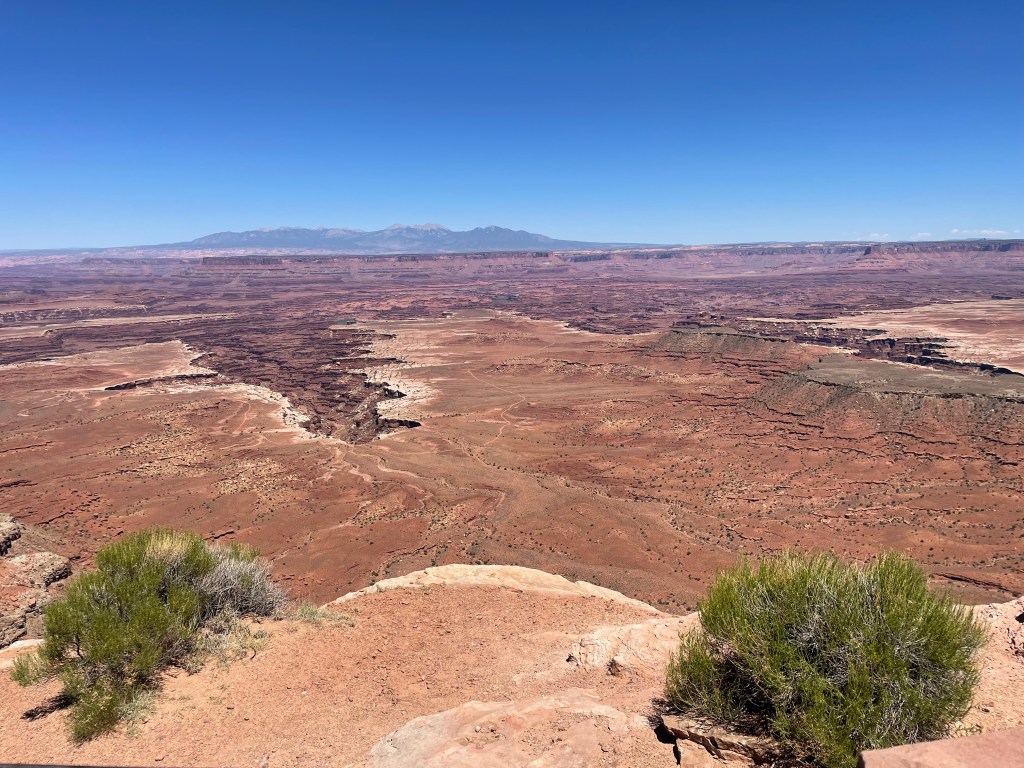
This is a huge park that’s divided into four districts: Island in the Sky, Needles, The Maze, and the rivers themselves.
If you mainly want to drive around and stop at gorgeous vistas, and maybe hike trails – and/or prefer a less physically demanding experience; be sure to visit Island in the Sky. It’s the easiest and most accessible district to visit, and the roads are paved so it can be done with regular vehicles. And it’s stunning – if this is the only district you visit, it’s worth the trip.


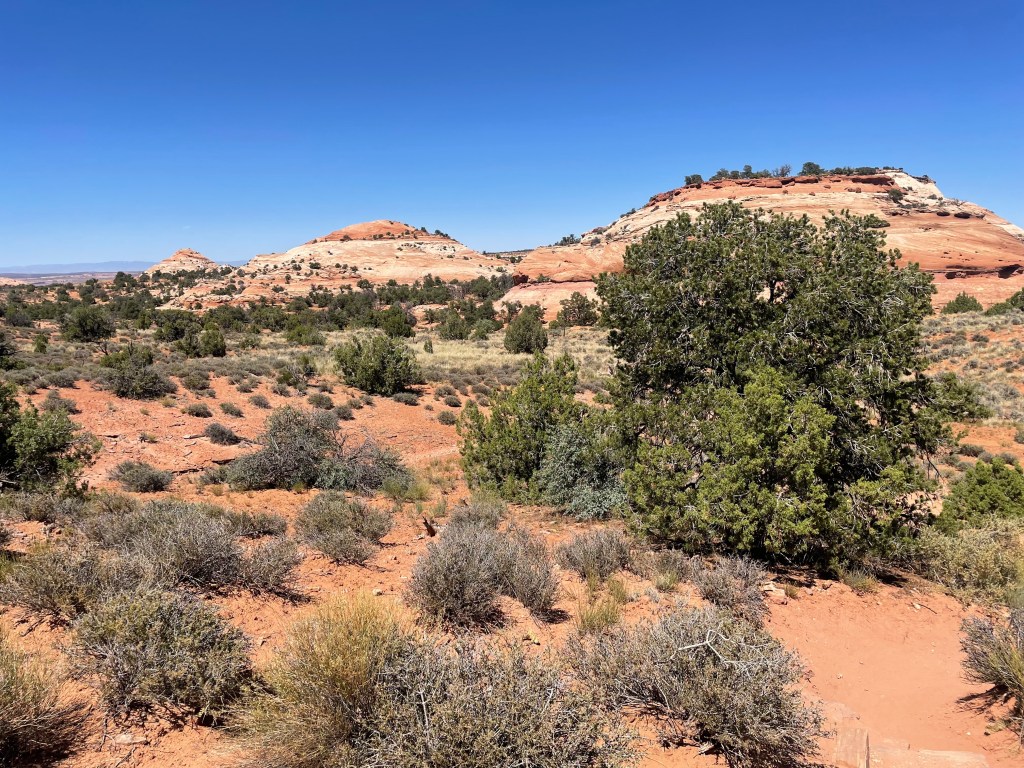
If you’re looking for more of a backcountry experience, have a 4×4 vehicle with high clearance, and are able to do more physically demanding activities; you could also visit the more remote and rustic Needles and The Maze.
Or, if you’d like a cool and refreshing water experience in contrast to the often-hot and dry weather on land in the area, you could experience the Green and Colorado Rivers. If you’re not a veteran rafter with solid outdoor survival skills yourself, you might want to book a tour – there are great offerings in the town of Moab.
Note: This park is rather rustic, and there’s no running water beyond the Visitor’s Centers – it’s also frequently very hot and dry much of the year, with daytime temperatures often exceeding 90°F/32°C or even 100°F/38°C. It is critical to bring plenty of water with you – at least a gallon per day for each person and pet. Bring even more if you’re planning on hiking.
Also, dress to protect your skin from the sun, and wear sunscreen, hats with lots of coverage, and sunglasses. These parks are also out of the way and don’t have gas/charging stations nearby, so be sure to fuel/charge up your vehicle in town before you head out there.
For more about visiting Canyonlands National Park, see here. See also their accessibility page here.
Dead Horse Point State Park
You’ll probably want to visit this one along with the Island in the Sky portion of Canyonlands National Park, because they’re very close to one another.
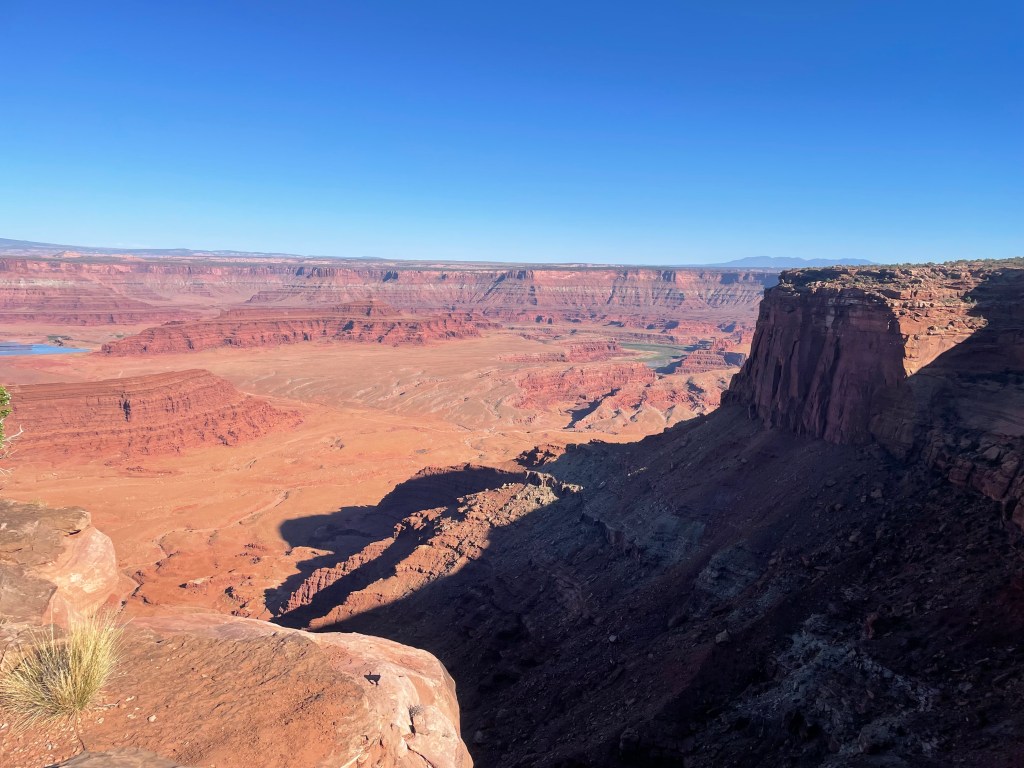
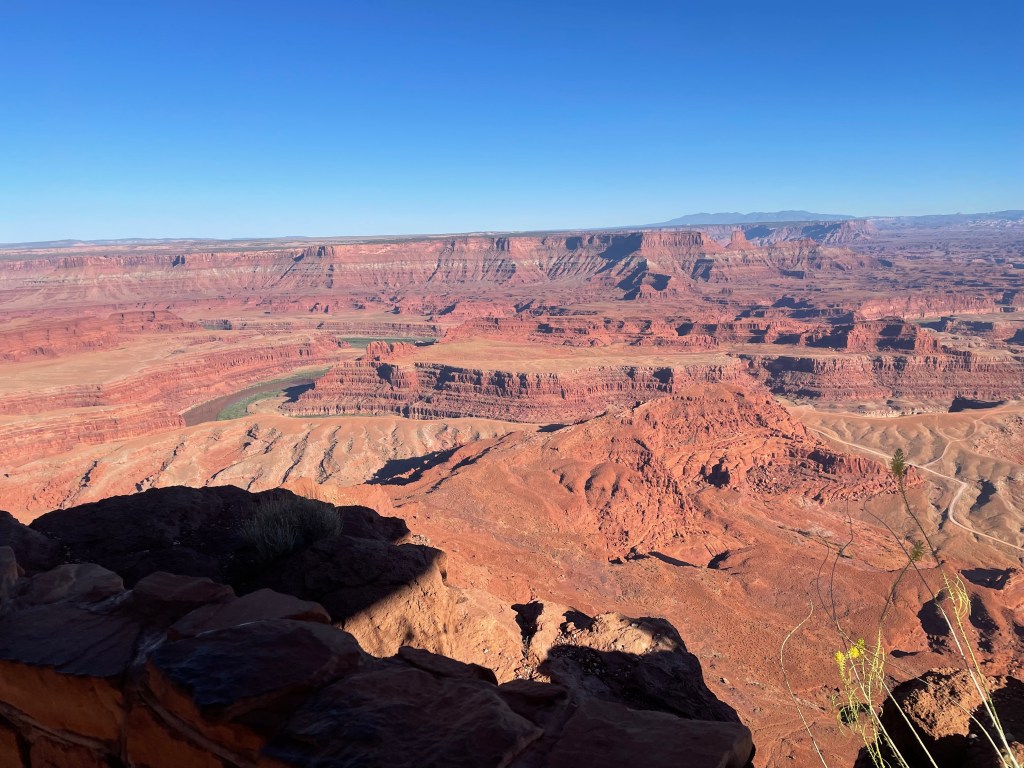
This park has canyon views comparable to those of the Grand Canyon – but with far fewer crowds. This is a must-see.


Tip: If you’re an animal lover, you might not want to read about how this park got its name.

For more about visiting this park, see here. Their accessibility page is not very specific, but some of the viewpoints do have a flat, paved area over the outlooks, a short distance from parking lots. There are also accessible restrooms at the Visitors’ Center.
Monument Valley Navajo Tribal Park
If you’re a fan of Westerns, you’ve likely seen Monument Valley as a gorgeous background in a film. Situated just on the Arizona side of the Utah-Arizona border in the Navajo Nation, this amazing scenery is not to be missed.

If you have a suitable vehicle, you can explore the unpaved path through Monument Valley for a closer-up look at the formations (they recommend a 4×4 with high clearance). Even if you don’t have such a vehicle, there are still great views from outside the Visitor’s Center.
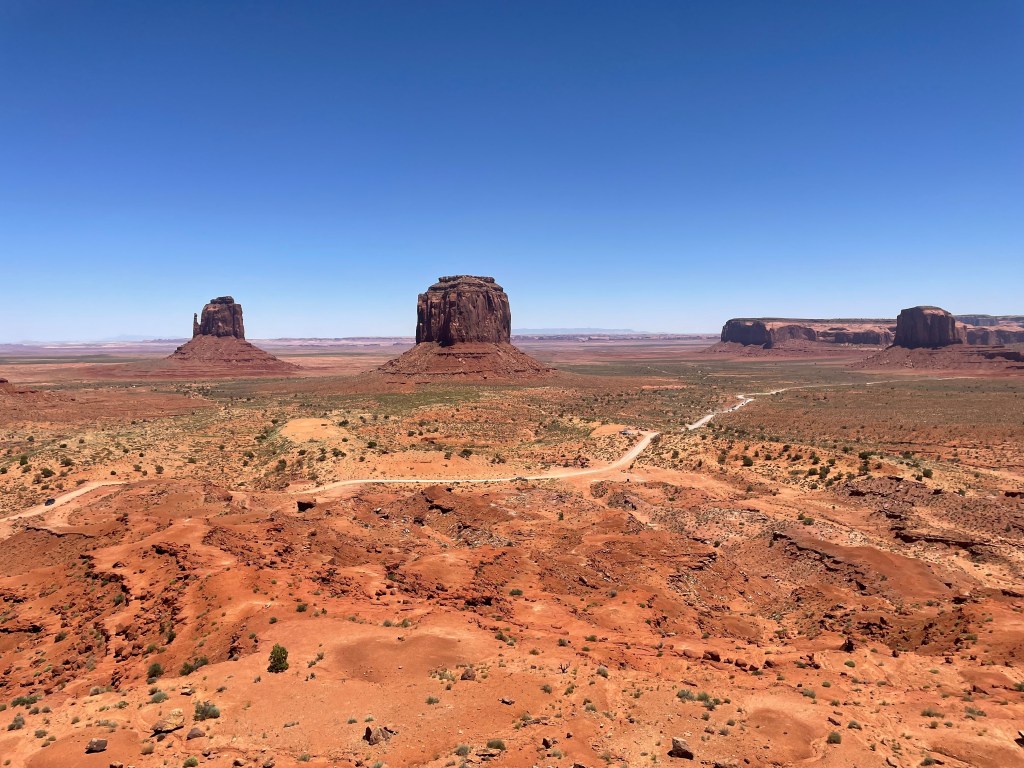
There’s also a Navajo museum on site, if you’d like to learn more about the tribe’s history and culture – including their key role in World War II, using their language.
Note: The State of Arizona does not observe daylight saving time, but the Navajo Nation does – so keep this in mind for timekeeping purposes while visiting this area.
For more about visiting Monument Valley, see here. I’m unable to find official accessibility information for this park, but there is a paved path with a bit of an incline between the parking lot and the Visitors’ Center, and the outlook from there onto Monument Valley is also flat and paved.
Goosenecks State Park
This park features a striking outlook over a deep canyon, with a network of meandering rivers flowing around it. This is a relatively short visit (unless you’re camping there), but worth a side trip if you’re in the area. It’s just north of the town of Mexican Hat.

For more about visiting this park, see here. Their accessibility page is not very specific, but there’s a short, flat dirt path from the parking area to the view outlook.
Valley of the Gods/Mexican Hat
About two hours south of Moab is the town of Mexican Hat. If you’re visiting the area, it’s a good and friendly town to stop in for gas and food, and a break from driving (Blanding is another good town along this route to stop in, closer to Moab – they also have a visitor’s center).
On the north edge of the town is the Mexican Hat Rock – for which the town is presumably named. There’s a turnout where you can stop and take a closer look.
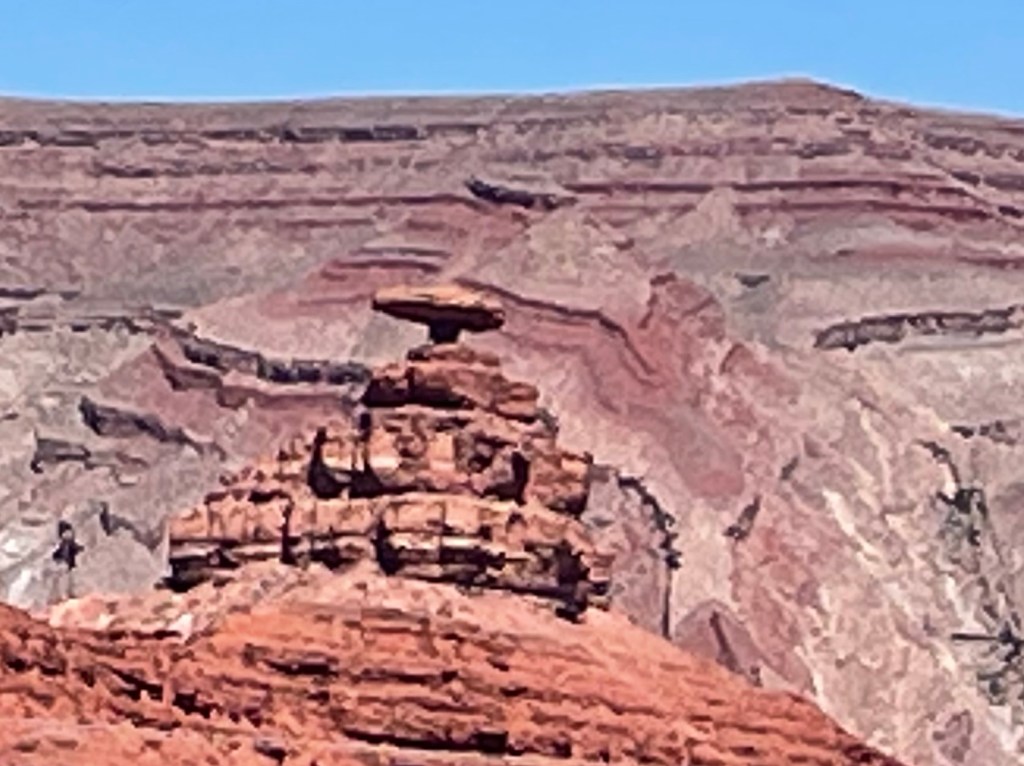
There’s also an area called Valley of the Gods along this highway, and it’s also an incredible sight. However, you’ll have to look driving by, as there’s not a turnout nearby. There are a series of scenic turnouts north of Valley of the Gods, though, where you can see similar formations.

Colorado River Scenic Drive/Cisco Ghost Town
About an hour northeast of Moab is the ghost town of Cisco, Utah. Although it is a ghost town, there’s still a general store open – and some homes and trailers are painted with bright murals, suggesting people still live in them and take care of them.

There’s a friendly vibe, and kind of a funky feel. It’s a neat stop if you’re in the area.
Be sure to take Route 128 to get between the two locations, as it’s the scenic route. You’ll drive around the Colorado River, with plenty of turnouts along the way. If you are into river rafting, there are also opportunities to do that.
The Town of Moab
While you’re visiting the awesome naturals wonders around it, be sure to allow some time to check out the town of Moab itself. Though small, there’s plenty going on here.

Dine at some of the diverse selection of restaurants (there’s a menu and things-to-do guide for the town here), shop for fresh food at one of several great grocery stores, listen to live music, sign up for a fun tour that’ll show you more than you could see on your own, and much more.
The town hosts an annual LGBTQ+ Pride celebration, so wear your finest rainbow gear and have a fabulous time! It’s also home to the annual Jeep Safari, if you’re extra adventurous and love off-roading (you can rent a Jeep if you don’t own one).
No matter who you are, there’s something for you here.
Night Skies of Southeastern Utah
Most of the other sights on here, you’ll want to see in the daylight. However, while you’re here, don’t forget to make a point of going outside in the middle of the night to see the famously brilliant, starry skies you’re able to view in this area.
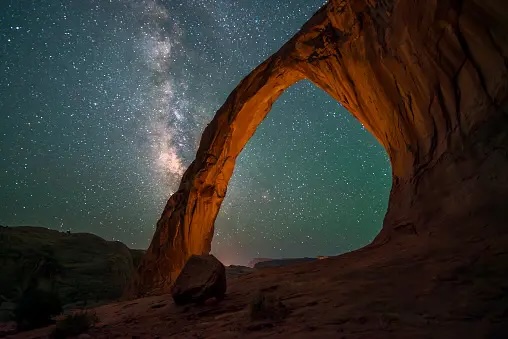
Due to the relatively rural and remote location of Moab and places nearby, the dark skies at night are amazing. Even in the well-lit town of Moab, far more stars were visible at night than back home (I’m from the San Francisco Bay Area).

But just a few minutes drive to Arches in the middle of the night gave a view of a star-filled sky where the Milky Way was visible across the middle of the sky, and one could see occasional shooting stars.
Don’t miss the night skies here!
Thank you, dear readers, for reading, following, and sharing. Here’s to stunning desert formations. If you enjoyed this post, please “like” and subscribe, if you have not already.
Check out my other blog, too – Free Range Life, at https://freerangelife.net.
Note: We are a participant in the Amazon Services LLC Associates Program. As an Amazon associate, we earn from qualifying purchases. We appreciate your support!
 World Class Hugs
Leave a comment